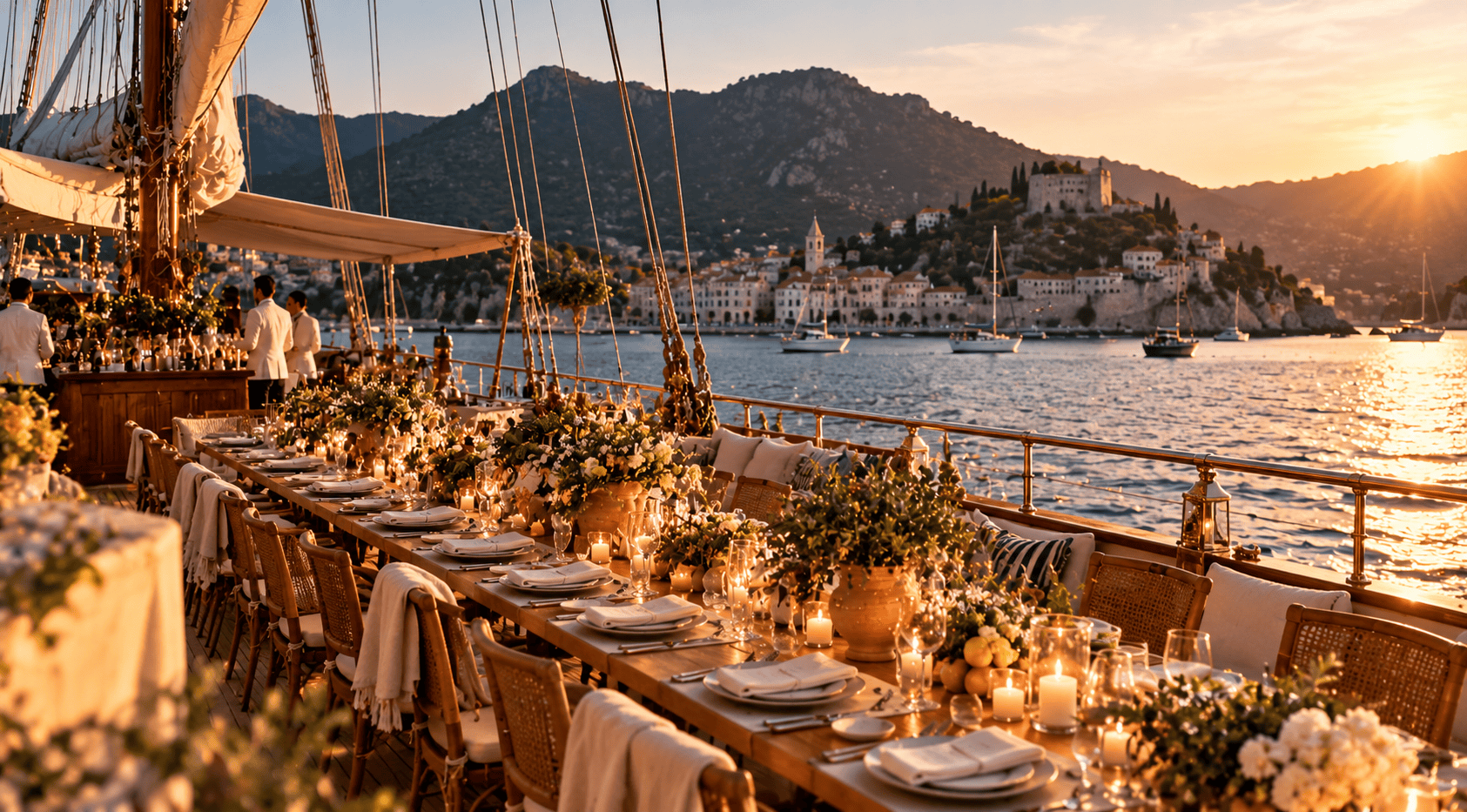
There is little point travelling a thousand miles to create exactly the same party you could have had at home.
A destination should change an event.
The light should be different. The flowers should belong there. The food should taste of somewhere. The journey between one moment and the next should make sense only in that landscape.
Otherwise, why go?
Begin with what is already there
Destination events can easily become exercises in transportation: an aesthetic conceived elsewhere, packed into trucks and recreated in a beautiful postcode.
The more interesting approach works in reverse.
Start with the architecture, landscape, craft, food, music, climate and rhythm of the place. Then decide what it needs from us.
A centuries-old palazzo does not need help looking Italian. A Mediterranean view does not need a scenic backdrop.
Confidence is knowing when the destination has already done the design work.
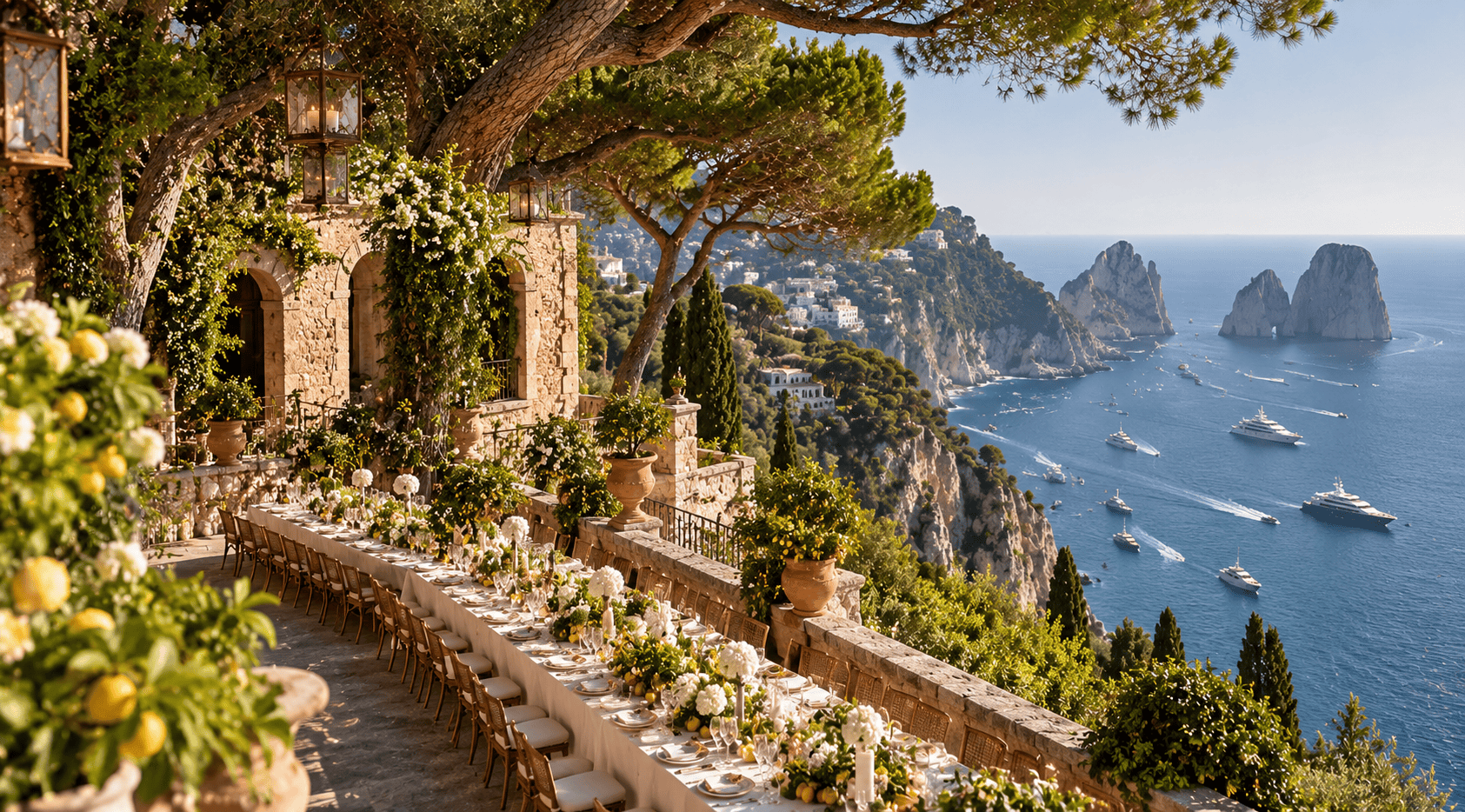
Don't decorate the view
When the setting is extraordinary, restraint can be far more powerful than spectacle.
That does not mean doing less everywhere. It means choosing where the intervention matters.
Perhaps the tables are extraordinary and the landscape untouched. Perhaps the arrival is almost completely unadorned and dinner is revealed as something fantastical. Perhaps one courtyard is transformed while another is left exactly as it has been for centuries.
Effort does not need to be visible in every direction.
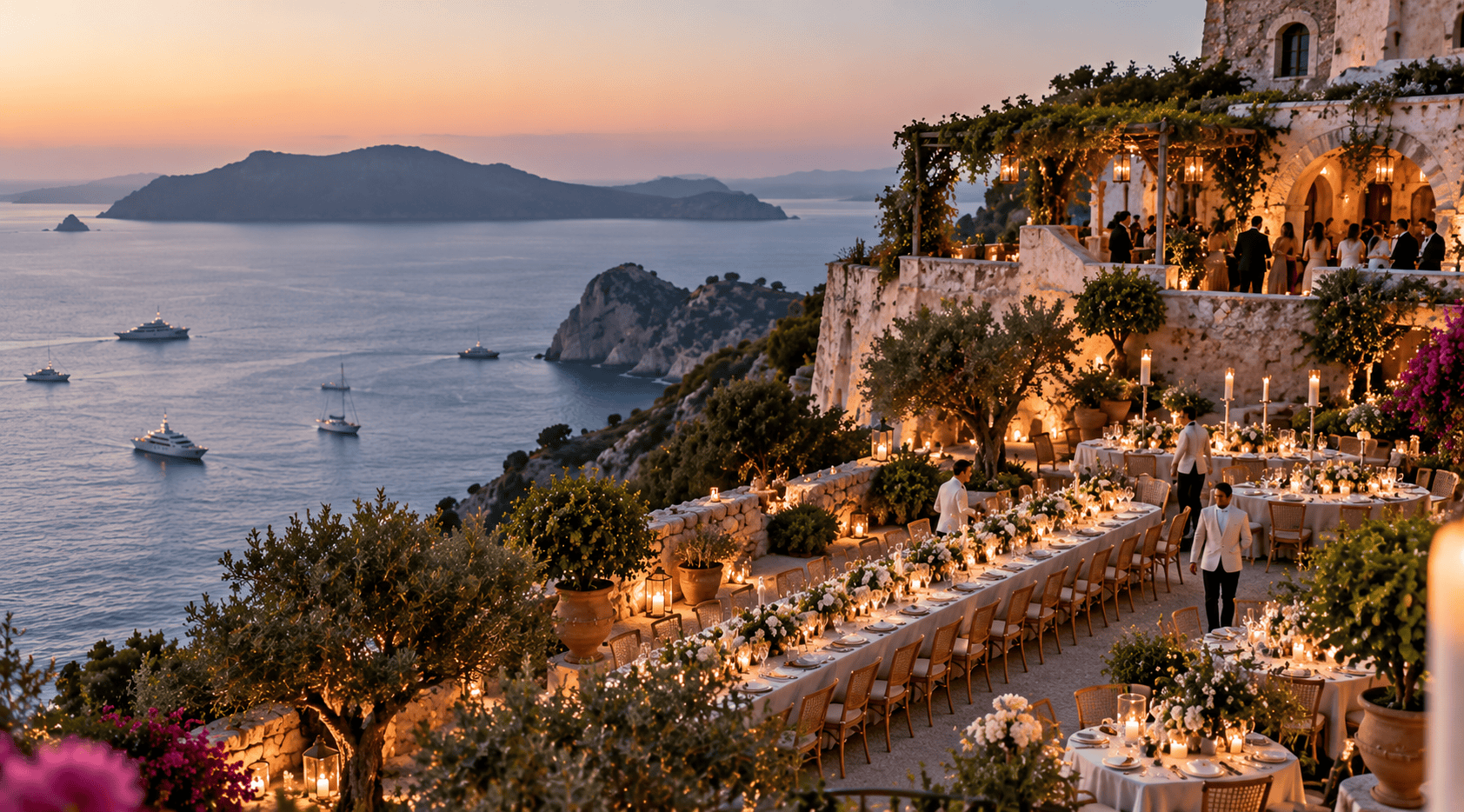
Find the people who know
The most valuable local supplier is often not the most obvious one.
It may be the florist who knows what is growing that week, the chef who knows the fisherman, the musician everyone in town knows, the ceramicist whose work has never appeared on an event moodboard.
These relationships give a celebration texture.
They also stop it feeling like a travelling production that happened to land there.
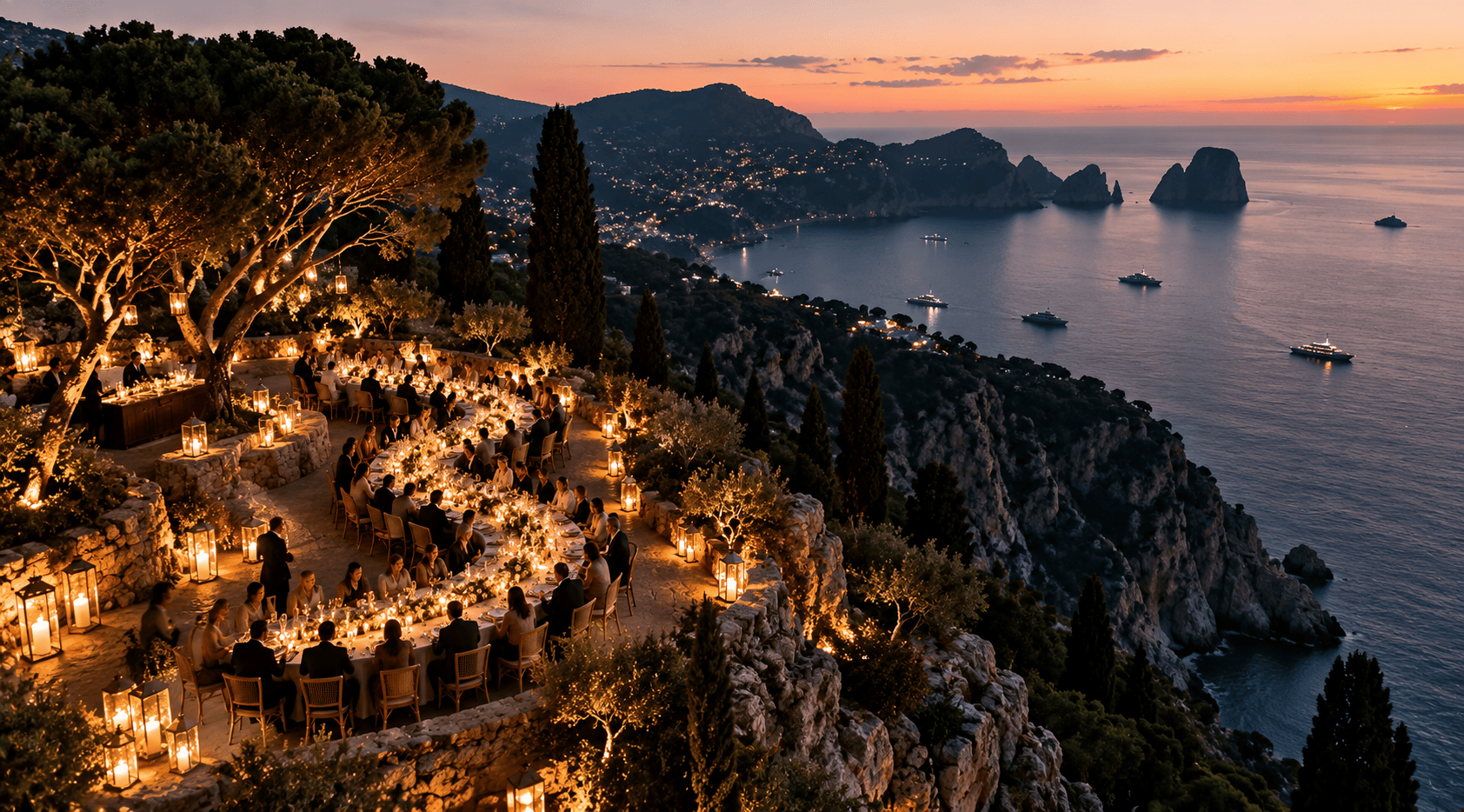
Make the journey worthwhile
If guests are crossing countries or continents, reward them.
Not with an exhausting itinerary.
With experiences that could not have happened at home.
A dinner in a place they would never find themselves. A boat rather than a coach. A long lunch that ignores the clock. A morning with absolutely nothing scheduled.
The luxury of a destination celebration is often time: people who would ordinarily spend six hours together suddenly have three days.
Avoid the postcard
Famous destinations are famous for good reason.
They are also photographed relentlessly.
There is pleasure in finding the angle guests have not already seen, the private house beyond the famous hotel, the inland town rather than the obvious coastline, the garden hidden behind a façade everyone has walked past.
The objective is not obscurity.
It is discovery.
Bring home a memory, not a theme
Guests may not be able to articulate why an evening belonged so completely to a place.
Perhaps it was the smell of the garden after dark. The temperature at midnight. The local wine. The sound of music travelling across water. Breakfast the following morning.
Those details are difficult to reproduce, which is exactly the point.
A destination should not simply appear in the photographs.
It should be impossible to remove from the memory.